

The Case of the Destroyed Diamond
What is value?
Ask yourself that simple question.
Exactly what is value? Where does it come from? Is it a real, tangible, physical thing, or can value be attached to something completely ephemeral?
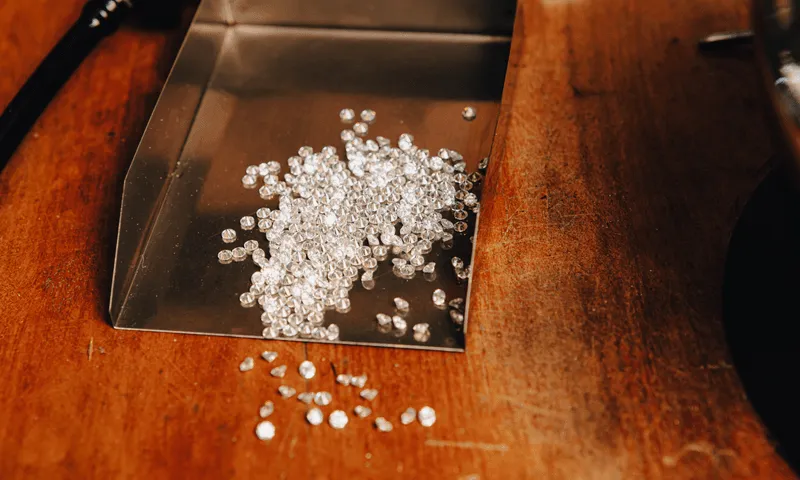
That was the question Dr. Natasha Che set out to answer when she purchased a $5,000 diamond and smashed it moments later. However, the value of the diamond did not disappear. Instead, it was transferred to a digital token known as an NFT.
NFT stands for Non-Fungible Token and refers to a unique digital token that cannot be duplicated. Details such as ownership history and transfers are permanently recorded on the blockchain, whose records are immutable and cannot be altered after the fact.
And what was the result of her experiment?
Her NFT sold for nearly $20,000 at auction and received a bid for more than twice that amount only a few hours later.
How did this happen?
Let’s explore the Case of the Destroyed Diamond by first examining how demand creates value.
How Does Demand Work?
Section titled “How Does Demand Work?”Demand typically exists because of human needs.
There is demand for food and shelter because they are essential for survival. But once we move beyond necessities into commodities and luxury goods, demand becomes a matter of desire.
Here are a few examples.
Example 1
Section titled “Example 1”There is virtually no demand for a software engineer in a rural village populated exclusively by farmers and manual laborers.
In that environment, the engineer’s specialized skills provide relatively little value compared to agricultural labor.
Example 2
Section titled “Example 2”In a modern city where computers are integrated into nearly every aspect of life, demand for software engineers skyrockets.
Their specialized skills become highly valuable because society desires them.
Example 3
Section titled “Example 3”For products and goods, value depends not only on demand but also on the ability to deliver them in a usable condition.
Consider premium Japanese beef.
It can command extremely high prices because refrigeration allows it to be safely transported across the world while preserving its quality. Its rarity and accessibility combine to create significant value.
Without refrigeration, however, the meat would spoil before reaching distant buyers. Demand would become localized, and its value would fall dramatically.
From Rock to NFT
Section titled “From Rock to NFT”This same principle applies to luxury goods like diamonds.
A diamond first gains value through the effort required to mine it. It then becomes even more valuable after being transported, cut, polished, and set into jewelry.
At that point, the physical production process is complete.
Yet the diamond’s value can continue to grow.
When it is displayed to potential buyers, emotional attachment and desirability increase its perceived worth.
Someone may wear the ring to formal events, tell others it was an engagement gift, or proudly show it to family and friends.
Each interaction increases awareness and desire among others.
As demand increases, so does value.
The Value of NFTs
Section titled “The Value of NFTs”This brings us back to Dr. Che’s experiment.
Despite destroying the physical diamond, she did not destroy its value.
Instead, that value was transferred into an NFT.
Consider the three characteristics that created the diamond’s value:
- It was difficult to produce.
- It cannot be duplicated.
- It is desirable to other people.
Each of these characteristics can exist within an NFT.
Creating the NFT required purchasing the diamond, minting the token, and destroying the original object.
The NFT itself is unique because blockchain technology guarantees that only one authentic token exists.
Finally, ownership of such a unique digital asset is desirable to collectors.
The experiment demonstrated that NFTs can possess value in much the same way as physical commodities—even when no physical object remains.
Why Bother With NFTs?
Section titled “Why Bother With NFTs?”For everyday necessities or products with obvious practical utility, NFTs may offer little benefit.
However, for objects whose value comes primarily from ownership, rarity, provenance, or collectibility—such as artwork or jewelry—NFTs offer several compelling advantages.
Preserving Value
Section titled “Preserving Value”A tokenized object can continue to retain value even if its physical counterpart is destroyed by accident or natural disaster.
One historical example comes from the enormous Rai stones used as currency in Micronesia.
Some of these massive stone disks fell into the ocean during transport. Yet because everyone in the community knew who owned them, the submerged stones continued to function as money.
In many ways, this represents an early form of a non-fungible asset.
Security
Section titled “Security”Digital tokens can be stored securely without requiring expensive vaults or safes.
A hardware wallet offering enterprise-grade security often costs little more than a standard leather wallet.
Better Financial Utility
Section titled “Better Financial Utility”Tokenized assets are far easier to use as collateral or payment.
Physical assets require transportation, storage, insurance, and verification.
Digital tokens can be transferred globally with minimal friction.
Atomic Transactions
Section titled “Atomic Transactions”NFT transactions are atomic.
Ownership transfer and payment occur simultaneously within a single blockchain transaction, eliminating lengthy settlement periods, shipping logistics, and third-party escrow arrangements.
Final Thoughts
Section titled “Final Thoughts”The case of the destroyed diamond offers a fascinating demonstration of how NFTs function and how value can persist long after a physical object no longer exists.
In some respects, the token became even more valuable than the original diamond.
Partly this was due to the characteristics discussed above—but also because it became the first and only NFT created from that specific destroyed diamond.
No physical diamond could make that claim.